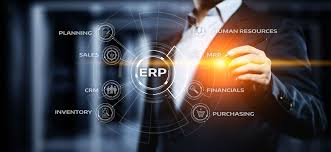
In today’s competitive business environment, organizations can no longer rely on intuition alone. Companies need accurate, real-time data to respond quickly to market changes, optimize operations, and stay ahead of competitors. This is where ERP analytics plays a critical role. By combining enterprise resource planning systems with advanced analytics capabilities, businesses can transform raw data into actionable insights that drive smarter decisions.
What Is ERP Analytics?
ERP analytics refers to the use of reporting tools, dashboards, data visualization, and predictive analytics within an ERP system to analyze business data across departments. Modern ERP platforms such as SAP, Oracle, and Microsoft integrate analytics directly into their systems, enabling organizations to monitor performance in real time.
Instead of exporting data to separate tools, users can access financial reports, sales metrics, inventory levels, and operational KPIs within a unified platform.
Centralized Data for Better Visibility
One of the biggest advantages of ERP analytics is centralized data management. Traditional systems often operate in silos—finance, HR, supply chain, and sales departments use different platforms. ERP consolidates all this information into a single database.
With a unified data source, decision-makers gain:
A complete overview of company performance
Accurate cross-department insights
Reduced data duplication and errors
Faster reporting cycles
This holistic visibility enables leaders to identify bottlenecks, inefficiencies, and growth opportunities more effectively.
Real-Time Reporting and Dashboards
Modern ERP systems provide customizable dashboards that display live data. Executives can track revenue trends, monitor inventory turnover, analyze production efficiency, and measure employee performance in real time.
Real-time reporting helps businesses:
React quickly to market changes
Adjust pricing strategies based on demand
Detect financial anomalies early
Improve operational agility
Instead of waiting for monthly reports, managers can make immediate, informed decisions.
Predictive and Prescriptive Analytics
Beyond historical reporting, advanced ERP platforms incorporate predictive analytics powered by AI and machine learning. These tools analyze past trends to forecast future outcomes.
Examples include:
Predicting seasonal sales fluctuations
Forecasting cash flow
Anticipating supply chain disruptions
Identifying potential customer churn
Some ERP systems also offer prescriptive analytics, recommending specific actions based on data insights. This allows companies not only to anticipate challenges but also to proactively address them.
Enhancing Financial Decision Making
ERP analytics significantly improves financial planning and budgeting. With accurate, up-to-date financial data, CFOs can:
Monitor profit margins in real time
Compare budget vs. actual performance
Identify cost-saving opportunities
Improve cash flow management
Advanced reporting tools reduce manual spreadsheet work and minimize human error, ensuring more reliable financial decisions.
Optimizing Supply Chain and Operations
Data-driven insights are especially valuable in supply chain management. ERP analytics enables businesses to:
Track supplier performance
Monitor inventory levels
Optimize procurement strategies
Improve demand forecasting
By analyzing operational data, companies can reduce excess inventory, prevent stockouts, and improve delivery timelines—ultimately increasing customer satisfaction.
Supporting Strategic Planning
Long-term strategic planning requires reliable data. ERP analytics provides historical trends and performance metrics that support:
Market expansion strategies
Product development planning
Resource allocation decisions
Risk management initiatives
When leadership teams rely on accurate data rather than assumptions, strategic initiatives become more targeted and measurable.
Improving Collaboration Across Departments
ERP analytics promotes transparency across the organization. When departments access the same data and KPIs, collaboration improves. Sales teams can align with production forecasts, finance can coordinate with procurement, and HR can plan workforce requirements based on operational demand.
This alignment reduces miscommunication and strengthens organizational efficiency.
Driving Competitive Advantage
Organizations that effectively leverage ERP analytics gain a significant competitive edge. They can:
Identify trends earlier than competitors
Make faster, data-backed decisions
Improve operational efficiency
Enhance customer experiences
In 2026 and beyond, companies that embrace data-driven cultures will outperform those that rely solely on traditional decision-making methods.
Conclusion
ERP analytics is no longer an optional feature—it is a strategic necessity. By centralizing data, enabling real-time reporting, and leveraging predictive insights, ERP systems empower organizations to make informed, data-driven decisions at every level.